Men wearing Dr·Medic black knee-high compression socks

The Compression Journal

Men’s High Socks, a considered fit for long days

Black Japanese knit, graduated support and a fit that disappears under a long day.

We made our men's high socks for the days that never seem to end, on your feet, on a plane or at the desk. Here is how we knit them and how to choose the right size.

By Peter Höljö and the Dr·Medic team2 October 20262 min readUpdated 16 October 2026

Lead image, From the Dr·Medic image library. Individual photographer credits are not recorded for this story.

Peter has spent much of his life on his feet and in the air, between Stockholm and Tokyo, between clinics and trade halls. Our compression socks started with a very personal wish: legs that still feel light at the end of the day.

In 2023 we launched our Compression Series, and the men's high socks were among the first pieces.

Knitted in Japan, finished in black

We chose a 140-denier knit, made in Japan, in a deep black that looks just as right with a suit as with sneakers. The pressure is graduated, stated at around 26 to 27 hPa at the ankle and 20 to 21 hPa at the calf, roughly 20 and 15 mmHg. Firmest where your legs need it most, gentler as it rises.
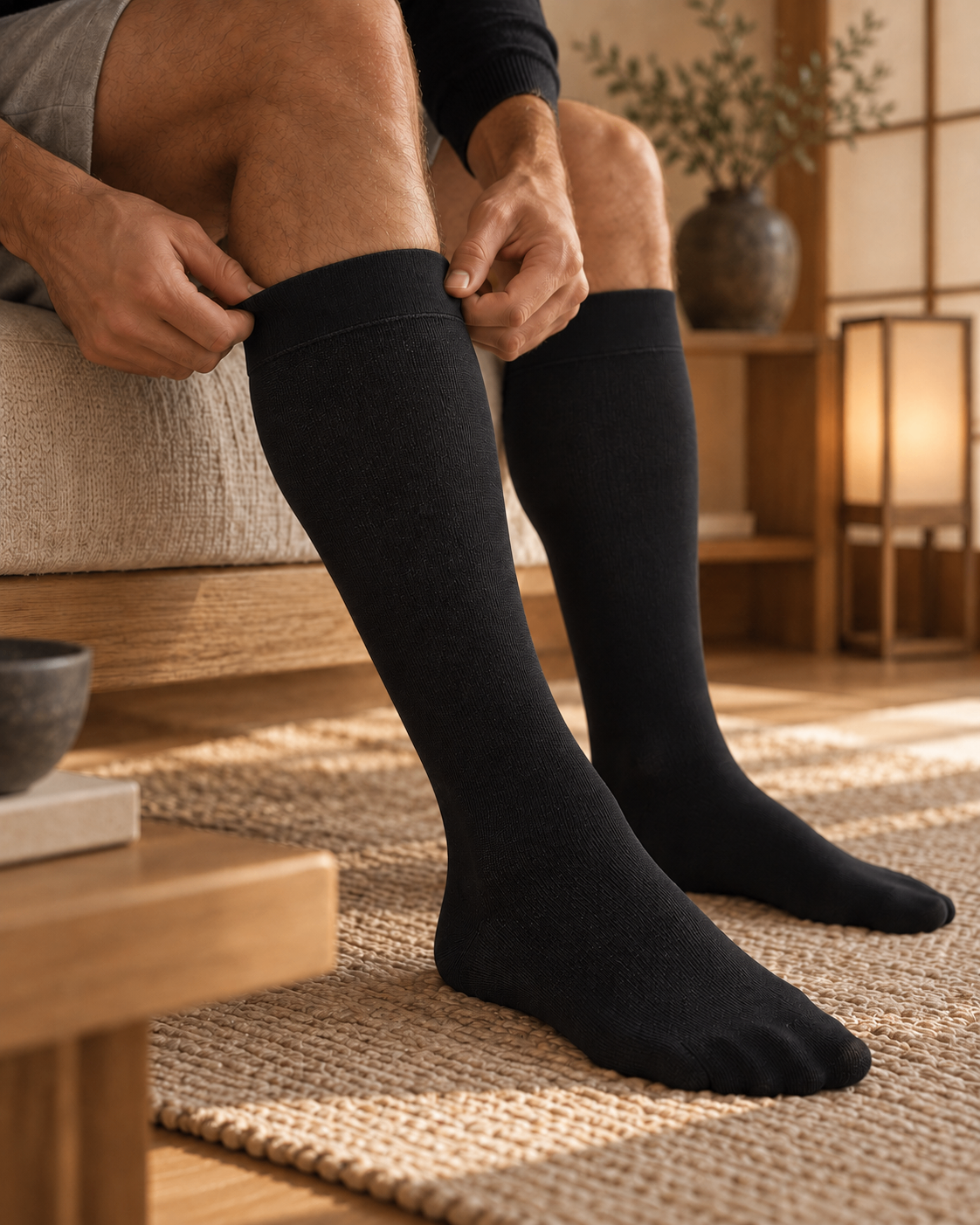
Cuff fit of the men's compression socks

How they feel through a day

Graduated compression is the classic choice for long flights, long shifts and long standing days, and that is exactly who we made these for: the surgeon, the chef, the traveller, the man who simply does not sit down much. They are comfort wear for everyday life rather than a medical prescription. If you have a circulation condition, speak with your doctor first.

Finding your size

Fit is everything with compression. Measure your foot length and use the M, L and XL chart on the product page. If you sit between sizes, our size guidance will help you choose.
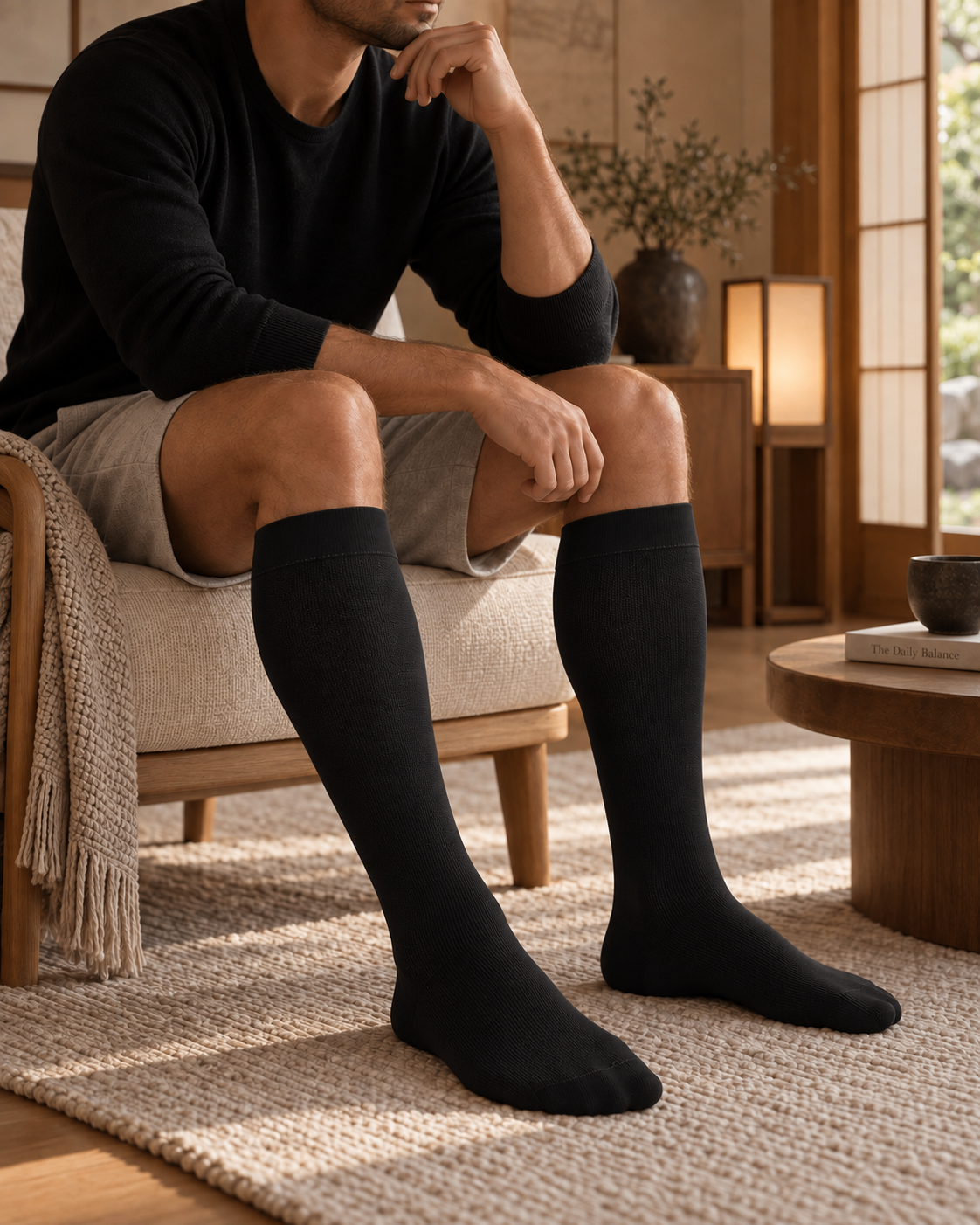
Seated, wearing the men's compression socks
A good compression sock should feel like a firm handshake, never a grip.

Find the full size chart on the compression collection, read about the women's socks and our tights, or learn how the knit works.

Peter Höljö and the Dr·Medic team

The Dr·Medic editorial team presents stories from the house, its product collections and practitioner archive. Manufacturer descriptions and individual experiences are identified separately from independent evidence.

Questions & answers

Which sizes are available?

The current product page lists M, L and XL. Use its foot-length chart and size equivalents, and ask for guidance if the fit is unclear.

Is 26 to 27 hPa the same as 26 to 27 mmHg?

No. 26 to 27 hPa is approximately 19.5 to 20.3 mmHg. A unit conversion is not certification of a medical compression class.

Can I roll the cuff down?

General clinical guidance advises against rolling or folding compression stocking tops because this can create a constricting band.

Can I use them instead of prescribed stockings?

Do not substitute them without advice from the clinician managing your care. This article does not establish suitability for a medical condition.

Sources & further reading

  1. 01
    Dr·Medic Men’s High Socks, chart and specification

    Manufacturer-stated pressures, materials and care guidance. Not independent performance testing.

  2. 02
    Cleveland Clinic, compression socks explained

    General clinical education, not an assessment of Dr·Medic products.

  3. 03
    Cleveland Clinic, recovery care and compression stocking fit

    General guidance including keeping stocking tops unfolded. Prescribed use requires individual advice.

Keep reading

Related stories

Compression hosiery is not suitable for everyone. If you have circulatory problems, reduced sensation, unexplained swelling or a relevant medical condition, seek qualified advice before use. Do not replace prescribed compression without your clinician’s guidance. Stop use and seek advice for pain, numbness or unusual colour changes.